Costa RicaCosta Rica

Search for Attractions


?

Boruca Indigenous Reserve

Last Updated: Apr 05, 2013

  • fiesta diablitos
 - Costa Rica

The Boruca, known also as the Brunka, are one of Costa Rica's most well-known indigenous groups. The Borucan population is currently estimated at around 2,000, most of whom live on the Boruca-Terraba Indigenous Reserve in southern Costa Rica. Though their numbers are small, the Borucas's expert woodworking skills and exuberant annual celebrations have earned the group national fame – and a dedicated rural tourism following.

Quick Facts

Location : 58 miles southeast of Dominical
Altitude : 1,800 feet above sea level
Telephone : 2730-1673
Entrance Fee : Free

Since the mid-1990's, Costa Rica's indigenous groups, including the Boruca, have welcomed rural tourists onto their lands. Visitors to the Boruca Indigenous Reserve are invited to observe the group's cultural traditions, visit native homes, and watch the Boruca create their unique works of art. Overnight stays are also available in traditional homes with very basic amenities.

The Boruca are a tribal division of the Talamanca indigenous group native to southern Costa Rica and Panama. The Boruca ancestors lived in chiefdoms that ruled over what is today known as Costa Rica's southern coast, stretching from Quepos south to the Panamanian border. Though they were once enemies with neighboring indigenous groups, today the Boruca are a composite of cultural Brunka, as well as the Abubaes, Borucac, Coto, Quepos, and Turrucaca indigenous groups.

Like their ethnic heritage, the Boruca language is a product of the group's ethnic blending during the colonial period. Boruca is considered a member of the Chibchan languages, but unfortunately is nearly extinct. The only fully fluent speakers are the group's elders, since younger generations understand Boruca but do not speak it well. The dominant language at the Boruca Reserve is Spanish.

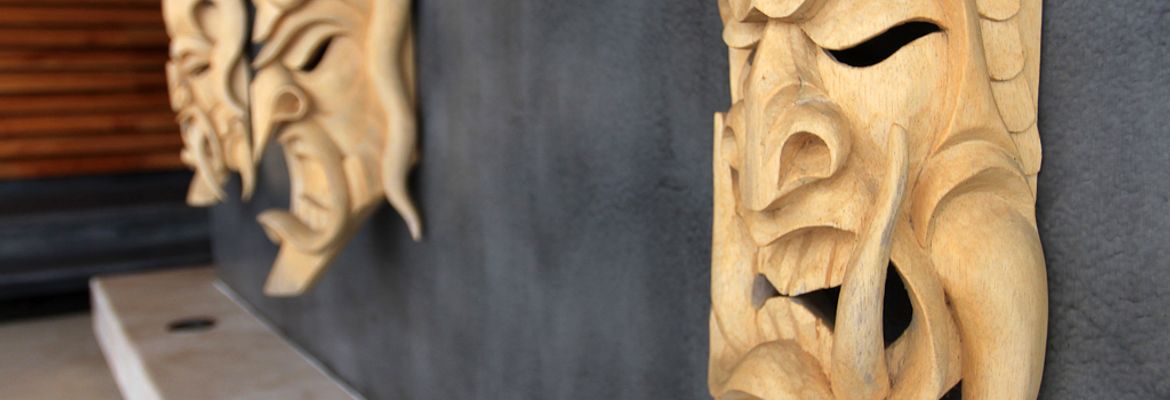
Brunka craftsmanship centers on the group's intricately carved masks, which are made from lightweight balsa wood. The masks' designs are varied, from animal-human hybrids to horned devil spirits, and each celebrates an aspect of Boruca history. In general, Boruca masks represent the tribe's ancestral forefathers, who helped protect the group from the Spanish conquistadors. Though the conquering Europeans had advanced weapons at their disposal, they were unable to defeat the Boruca, who were under the protection of the animal spirits.

The Boruca also create cedar wood masks, which are never painted and carved only from reclaimed wood gathered from fallen trees. Artisans generally use the tools of their ancestors – chisels and picks – to carve the beautiful masks, which take about a month to create. Additionally, the Boruca are expert textile weavers. They pick wild cotton, which grows on the reserve's hillsides, and then spin the fiber by hand before coloring it with natural dyes derived from mango, teak, and twiza leaves, among others.

History:

When the Spanish first arrived in Costa Rica, they did not encounter large native kingdoms like those of the Inca in Peru or the Maya in Mexico and Guatemala. Instead, the conquistadors discovered small but diverse indigenous communities that each had their own culture, traditions, and beliefs. When the Spanish set out to conquer the indigenous, and to claim Costa Rica as their own, many tribes fled into the high interior mountains. Though the conquistadors chased them into the mountains, the Europeans, even with their advanced weaponry, never conquered the Boruca.

In 1939, the then-autonomous Costa Rican government established the General Law of Common Lands, which designated certain areas to be the inalienable and exclusive property of the nation's indigenous people. In 1956, the Boruca-Terraba Reserve became one of the country's first indigenous reserves. In 1977, the Indigenous Law of Costa Rica established the rights of the nation's native groups, and stated that Costa Rica's indigenous reserves would be self-governing.

Fiesta de los Diablitos:

Spanish for the "Festival of the Little Devils," this Boruca tradition is an annual celebration in both Boruca (December-January) and Rey Curre (the first week in February). The charged fiesta reenacts the battle between the Spanish conquistadors and the Brunka tribe, which was never conquered. This victory is celebrated with an elaborate ceremony, masks, and costumes to portray the Spanish, who are represented by a bull, and the Boruca diablitos, or ancestral animal spirits. Guests are welcome in both villages for the celebrations, but only indigenous men are permitted to participate in the traditional dance.

Amenities:

The Boruca Indigenous Reserve has an interesting museum that exhibits the techniques and natural dyes used in Boruca traditional crafts. A meeting center for local artisans, the museum also serves as a workshop and as an outlet to sell masks, baskets, textiles and other finished products to visitors. Restaurants and small lodging facilities can be found in towns surrounding the reserve.

Tours:

There are very few phones within the reserve, so the best way to schedule a visit is through local tour companies, which provide transportation and a knowledgeable guide. English-speaking tours depart from nearby Dominical. Contact Marina Lazaro Morales/La Flor Cooperativa 2730-1673 or Harold at 8329-8770.

Getting There:

The Boruca Indigenous Reserve is located roughly 30 minutes south of Buenos Aires, or about 3.5 hours from San Jose. From the capital, take the Interamerican highway south toward San Isidro del General. At Palmar Norte turn inland toward Buenos Aires. Follow this road over three rivers; slow down after the Puerto Nuevo bridge and look for the left turn into Boruca. Depending on the weather, the 20-minute drive up to Boruca is best in a 4WD vehicle or a car with high clearance. At the bar just as you enter the town, turn left and go down the hill one block past the police station. Look for the museum and the cooperativa La Flor, which is in a thatched-roof building on your left.

Nearby Destinations

Attraction Types

Boruca Indigenous Reserve Map

Stay Connected

Get updates, special deals and our monthly newsletter!

Subscribe to Topic