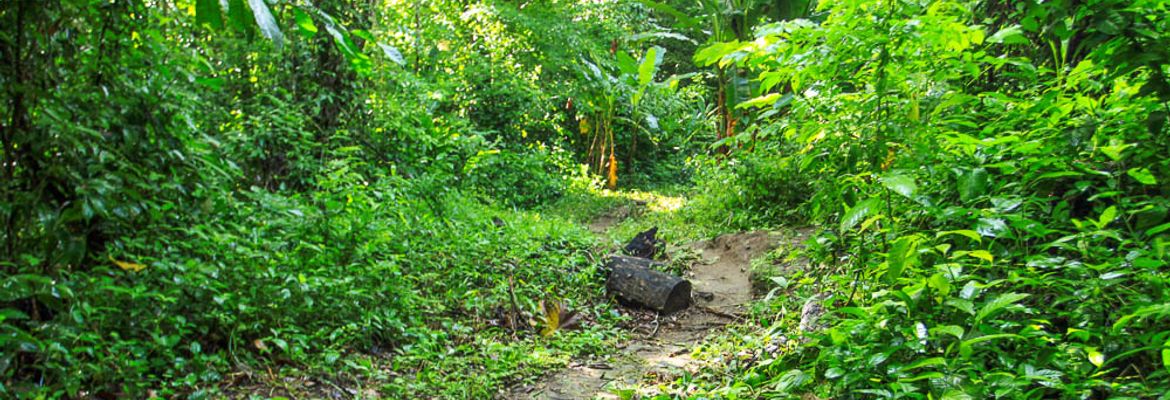
Carara National Park
Last Updated: Apr 05, 2013
Carara National Park is a crucial sanctuary for wildlife in the increasingly developed Pacific Zone. The park encompasses both wet rainforest of the southern Pacific and the dry tropical forest of the northwest. Located in this unique transition zone, Carara National Park hosts flora and fauna observed in both the Osa Peninsula and Guanacaste Province.
Toucans, anteaters, agoutis, sloths, wild pigs and white-faced monkeys inhabit its varying ecosystems. Carara is also home to nearly 450 scarlet macaws, and is one of the country’s best areas to view these colorful birds. Every year between December and April, visitors can observe scarlet macaws nesting in empty tree cavities throughout the park.
The park's landscape includes primary and secondary rainforests, dry tropical forest, a lagoon, and marshlands formed by the seasonal flooding of the Tarcoles River. Celebrated for its population of more than 2000 American crocodiles, the Tarcoles River flows from the Nicoya Peninsula into the Pacific Ocean and forms the northern border of Carara National Park. Also known as the Rio Grande de Tarcoles, it is one of Costa Rica’s largest rivers, and is an important watershed for much of the Central Valley.
The Tarcoles boasts one of the planet’s biggest populations of American crocodiles, with an average of 25 crocs per square kilometer. The term Carara is actually an indigenous word meaning “river of crocodiles." These prehistoric reptiles can measure more than 12 feet from snout to tail and are a common sight on safari boat tours. If traveling from San Jose or Puntarenas, be sure to stop at the Tarcoles River Bridge where you can often see more than a dozen massive crocodiles sunning themselves on the river’s edge.
Carara also hosts gallery forests (secondary forest growing on land formerly used for agriculture) along the banks of the river. The primary forests, occupying most of the park, are thick with creeping vines and epiphytes. Over 400 species of birds inhabit the park, including six species of heron, egrets, roseate spoonbills and ospreys.
Archeological sites uncovered in this area indicate that between 300 and 1500 AD, a village was located here, complete with a cemetery situated on the hill overlooking the Tarcoles River. Digging has unearthed a rectangular foundation for a structure made from rocks taken from the river. The nearby village is named Lomas Carara, and archeologists speculate that it flourished in the centuries before Columbus, probably wielding political and economic control over the land near the Tarcoles River.
Weather:
March and April are the hottest and driest months in the park. Average annual rainfall is around 110 inches and daytime temperatures range in the mid 80's.
Activities:
Wildlife watching, rainforest hikes and crocodile tours along the Tarcoles River are available. Naturalist guides can be hired for the two-hour hike through the park. Visitors should note that camping is not permitted within Carara National Park.
Facilities:
The Quebrada Bonita ranger station has picnic tables, restrooms and maps available for hikers. A couple of the trails have picnic areas as well. The station is located on the left side of the road as you are driving towards Jaco, about 10 minutes after crossing the Tarcoles River Bridge.
Trails:
There are three hiking trails in the park. The .75 mile Araceas trail parallels the river and passes marshy areas. This loop trail can be combined with the Quebrada Bonita trail (.85 mile). The 2.5 mile Laguna Meandrica trail is located north of the main park entrance and winds deeper into the park. This easy trail traverses dry transitional forest and ends at the marshlands of the Laguna Meandrica.
Flora & Fauna:
In addition to crocodiles, the rivers, marshes and forests of the park are home to a diverse population of animals. Wildlife enthusiasts will enjoy spotting sloths, anteaters, agouti, white-faced monkeys, vine snakes, ocelots, kinkajous, margay cats, collared peccaries and white-tailed deer. Toucans, roseate spoonbills, jacanas, herons, manakins and trogons are commonly seen, especially in the early morning.
This is one of only two areas in Costa Rica where scarlet macaws are endemic. These large parrots are easiest to spot in the early morning or late afternoon.
Guanacaste trees, strangler figs, cecropia, deciduous kapok trees and cacti are some of the park's native flora.
Where to Stay:
Most visitors stay in the nearby towns of Jaco, Playa Hermosa or Esterillos and take day trips to the park. Jaco is brimming with tour operators that offer morning or afternoon excursions to the park including transportation and a naturalist guide.
Getting There:
Carara National Park is roughly an hour drive from San Jose, or the international airport. From San Jose, follow Highway 27 for 35 miles to the town of Orotina. Three miles past Orotina, turn left on Highway 34, the coastal highway toward Jaco. Continue for 11 miles until you reach the bridge over the Tarcoles River. The Quebrada Bonita ranger station and park headquarters is two miles farther south, on your left.
Nearby Destinations
Explore Carara National Park With Us
Attraction Types
- Beaches (1)
- Exhibits (2)
- Farms (1)
- Gardens (8)
- Hot Springs (5)
- National Parks (27)
- Plantations (4)
- Reserves (22)
- Volcanoes (16)
- Waterfalls (2)
- Wildlife Refuges (27)
Carara National Park Map
Wildlife Sightings
Stay Connected
Get updates, special deals and our monthly newsletter!
